
Year-Round Glamping Tents
Year-round comfort is not created by one feature alone. It comes from the right combination of insulation, breathable materials, ventilation, protected openings and climate-appropriate heating or cooling.
Technical configuration is selected according to intended use and operating conditions.
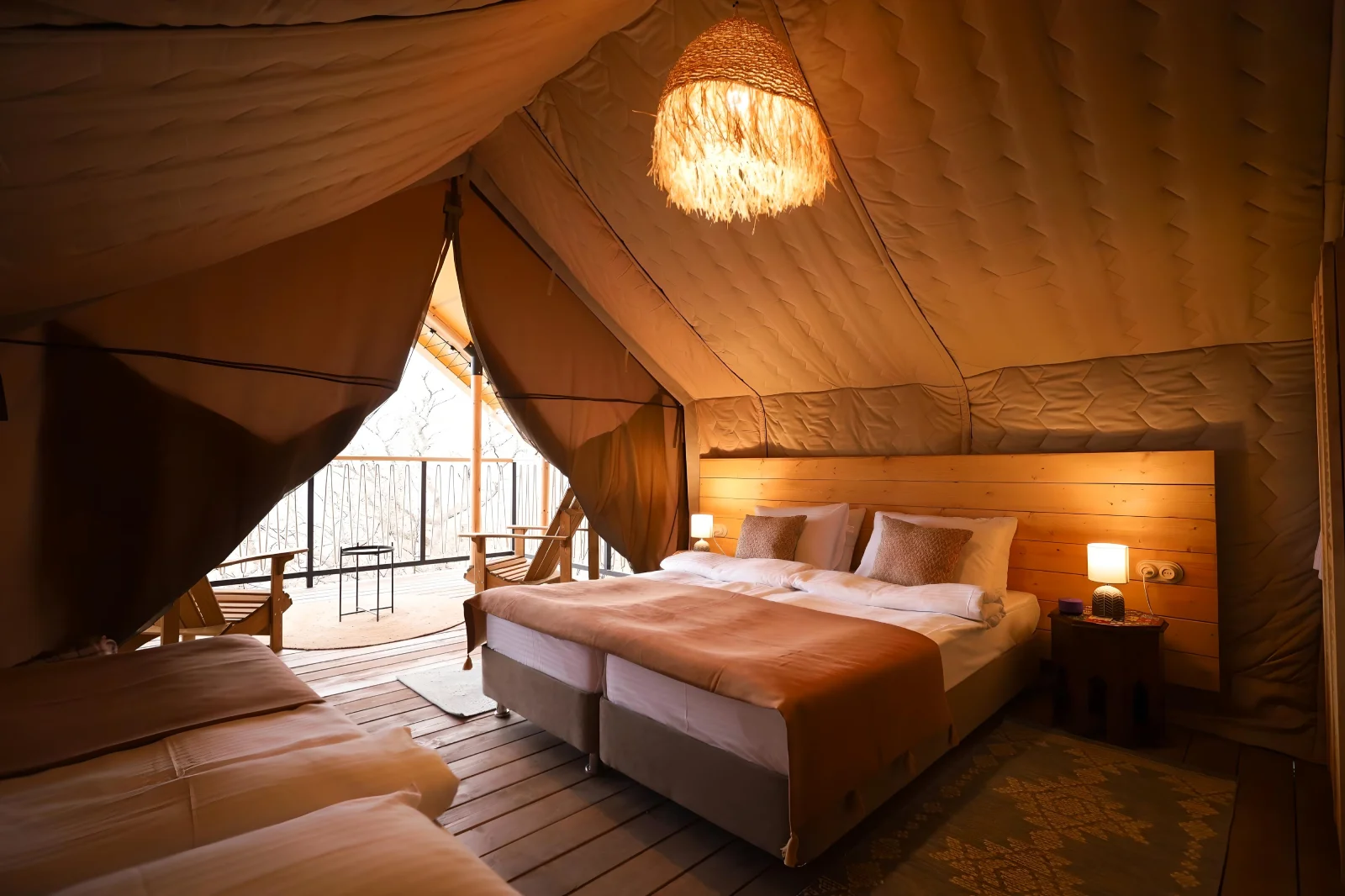
What makes a glamping tent suitable for year-round use?
A high-quality glamping tent can be used far beyond the summer season when its envelope and interior climate are configured correctly. The goal is not simply to add insulation, but to create a balanced system that manages heat transfer, airflow and indoor comfort throughout changing weather conditions.
Wildhomes uses robust structural materials and technical fabrics developed for demanding outdoor hospitality. For extended-season and year-round operation, the final comfort specification is defined around the climate, altitude, temperature range and intended use of the accommodation.
Four elements work together
Insulation is important, but it is only one part of an all-season glamping unit. The complete interior environment depends on several elements working together.
Thermal insulation
An optional thermal module reduces heat transfer through the tent envelope and helps create more stable interior conditions during colder and warmer periods.
Breathable inner layer
The inner technical fabric is selected to support air exchange within the layered envelope, contributing to a more comfortable interior environment.
Natural ventilation
Air movement is essential in fabric accommodation. Proper ventilation helps reduce trapped humidity and supports better moisture and condensation management.
Controlled openings
Doors, windows and glazed openings help create a more protected interior while allowing daylight and controlled ventilation according to the selected configuration.
Insulation extends the operating season
For models where the thermal option is available, Wildhomes can add an insulated inner build-up designed to improve thermal performance and interior comfort. The thermal module is not treated as decoration; it is a functional layer within the accommodation envelope.
The thermal system supports heating during colder periods and helps reduce unwanted heat transfer during warmer weather. Heating and cooling equipment itself is selected separately according to the project and local climate.
Insulation helps the climate system work more efficiently
The purpose of the thermal module is not to replace heating or cooling. It helps the accommodation retain a more stable interior temperature so that the selected climate-control equipment does not have to compensate for an uninsulated envelope.
The required heating or cooling capacity depends on the destination, unit size, occupancy pattern, glazing and expected outdoor temperatures. Wildhomes does not present one universal HVAC specification for every location.
Air exchange matters as much as insulation
A completely sealed interior is not the goal. Glamping accommodation needs controlled air exchange so that moisture generated by guests and temperature differences does not remain trapped inside the unit.
The density and structure of the Wildhomes inner fabric support airflow within the layered tent system. Combined with natural ventilation, this helps reduce moisture accumulation and condensation risk while making the interior feel more comfortable.
Year-round use depends on the operating environment
The structural materials, timber and technical fabrics used by Wildhomes are designed for demanding outdoor conditions. The same product family can therefore be used across very different hospitality environments.
What changes is the comfort specification. A mild coastal destination, a continental winter climate and a high-altitude mountain location do not create the same heating, cooling, ventilation or insulation requirements. The correct configuration is defined around the actual conditions in which guests will stay.
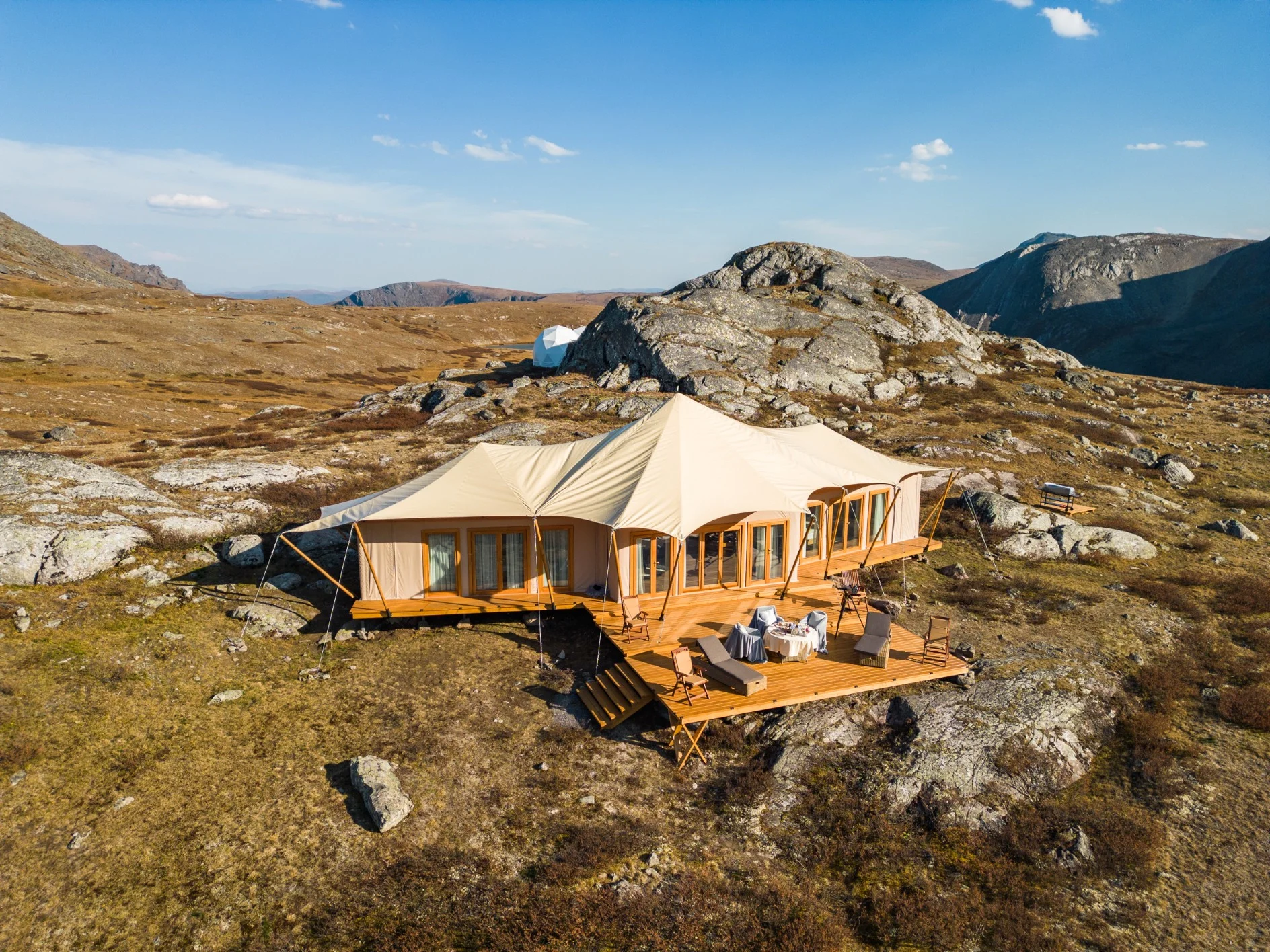
A year-round configuration at approximately 2,400 m altitude
This Wildhomes accommodation unit was installed at approximately 2,400 metres above sea level. The project demonstrates how a glamping structure can be developed into a protected, insulated hospitality space for a demanding mountain environment.
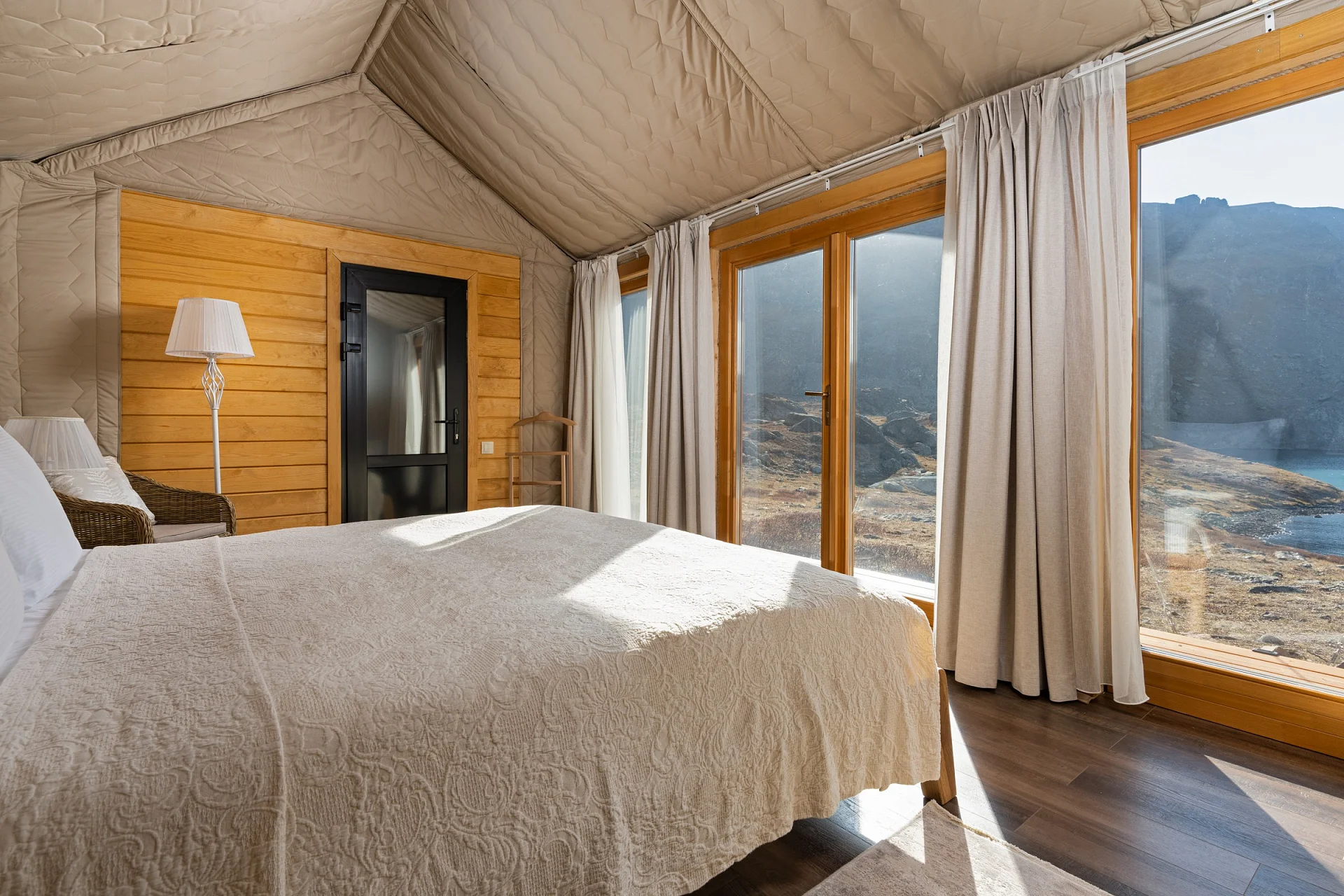
Inside, the thermal build-up is clearly visible together with full-height doors and windows. The result is a more controlled interior environment without losing the lightweight architectural character that defines glamping accommodation.


Built around durable technical materials
Year-round usability begins with the quality of the base structure and envelope. Wildhomes timber-frame tent systems combine treated structural timber, engineered connections and layered technical fabrics for professional outdoor hospitality use.
Treated structural timber
Selected timber members are treated and protected for long-term outdoor use.
Outer membrane
Heavy-duty outer membrane specification used across key Wildhomes tent systems.
Inner technical fabric
Durable inner fabric forms part of the layered interior envelope and supports the ventilation concept.
Compare Wildhomes glamping systems
Explore the main accommodation systems and their available comfort options. Final year-round configuration depends on the selected model and intended use.
Year-round glamping tent questions
Can glamping tents really be used all year?
Yes, when the selected model is configured for the intended operating conditions. Year-round comfort depends on the complete interior climate system, including insulation where available, ventilation, protected openings and suitable heating or cooling.
Is insulation alone enough for year-round use?
No. Insulation reduces heat transfer, but ventilation, moisture management, doors and windows, occupancy and the selected heating or cooling solution also influence interior comfort.
How does Wildhomes manage condensation and moisture?
The layered tent system uses technical inner fabrics and natural ventilation to support air exchange. This helps reduce trapped humidity and condensation risk when the unit is operated correctly.
Can heating and air conditioning be used inside a glamping tent?
Yes. Heating and cooling can be integrated according to the local climate and the selected unit. The required equipment and capacity should be specified for the actual destination rather than treated as one universal solution.
Does every destination need the same year-round configuration?
No. Temperature range, humidity, altitude, seasonal exposure and expected guest use differ by location. These factors determine the most appropriate comfort specification.
Choose a model for year-round use
Select the Wildhomes model you are considering and tell us where and how you plan to use it. We can then discuss the appropriate comfort configuration for the intended operating conditions.



