
How to Choose a Quality Glamping Tent
Building a successful glamping business starts with choosing a tent that is designed for long-term commercial use. While many tents may look similar, the quality of their construction, materials and engineering determines how they perform over years of operation.
A premium glamping tent should withstand changing weather conditions, frequent guest use and continuous outdoor exposure while requiring minimal maintenance. Understanding these factors helps investors choose a solution that delivers long-term value rather than the lowest initial price.
Structural Frame and Stability
The structural frame is the foundation of every glamping tent. A well-designed timber structure distributes loads evenly and provides stability during wind, snow and continuous daily use.
Commercial glamping accommodation should never rely on lightweight construction intended for seasonal camping. A stronger frame increases durability, reduces maintenance and improves the overall lifespan of the investment.

Timber Quality and Wood Treatment
The quality of timber has a direct impact on the strength and longevity of the structure.
Premium glamping tents use carefully selected structural timber that is properly dried, treated and protected against moisture, insects and natural weathering. Well-processed timber maintains its strength and appearance even after years of outdoor exposure.
Poor-quality wood may reduce manufacturing costs, but it often leads to deformation, cracking and increased maintenance over time.
Technical Fabrics and Weather Resistance
The outer fabric is one of the most important components of a glamping tent.
High-quality technical fabrics are designed to resist UV radiation, rain, humidity and temperature changes while maintaining their structural integrity over many seasons.
A durable fabric system also helps reduce maintenance costs and extends the service life of the entire accommodation unit.
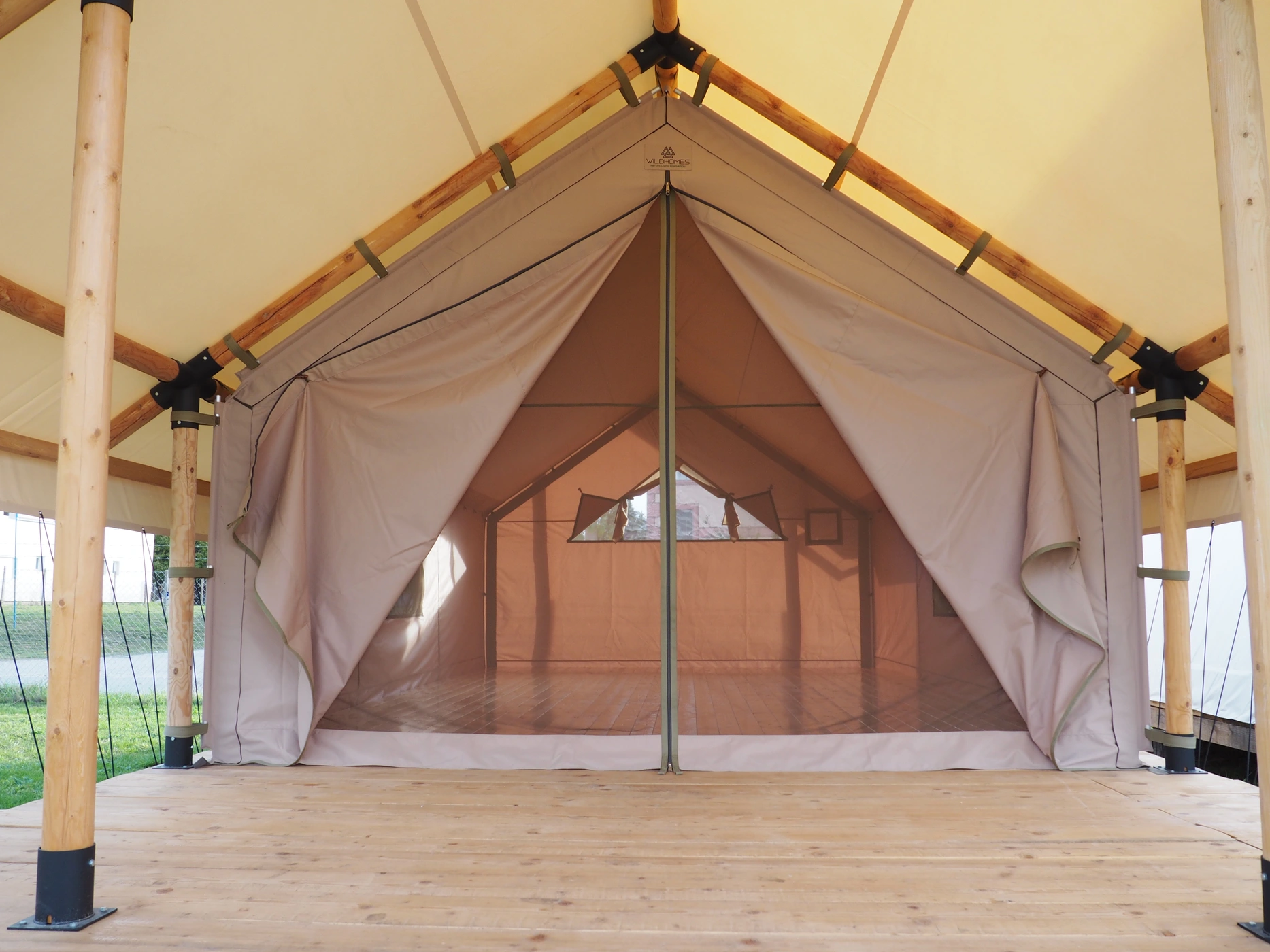
Oxford Fabric and Natural Ventilation
Modern glamping tents benefit from breathable technical fabrics that allow natural airflow while protecting the interior from external weather conditions.
Proper ventilation helps reduce condensation, improves indoor comfort and creates a healthier environment for guests throughout the year.
This balance between insulation and ventilation is essential for long-term hospitality use.
Stitching Quality and Industrial Threads
Even the highest-quality materials depend on precise manufacturing.
Industrial-grade threads and reinforced stitching increase resistance to wind loads, moisture and continuous tension. Strong seams maintain the integrity of the fabric system throughout years of operation.
Attention to these manufacturing details is often what separates commercial-quality glamping tents from lower-cost alternatives.
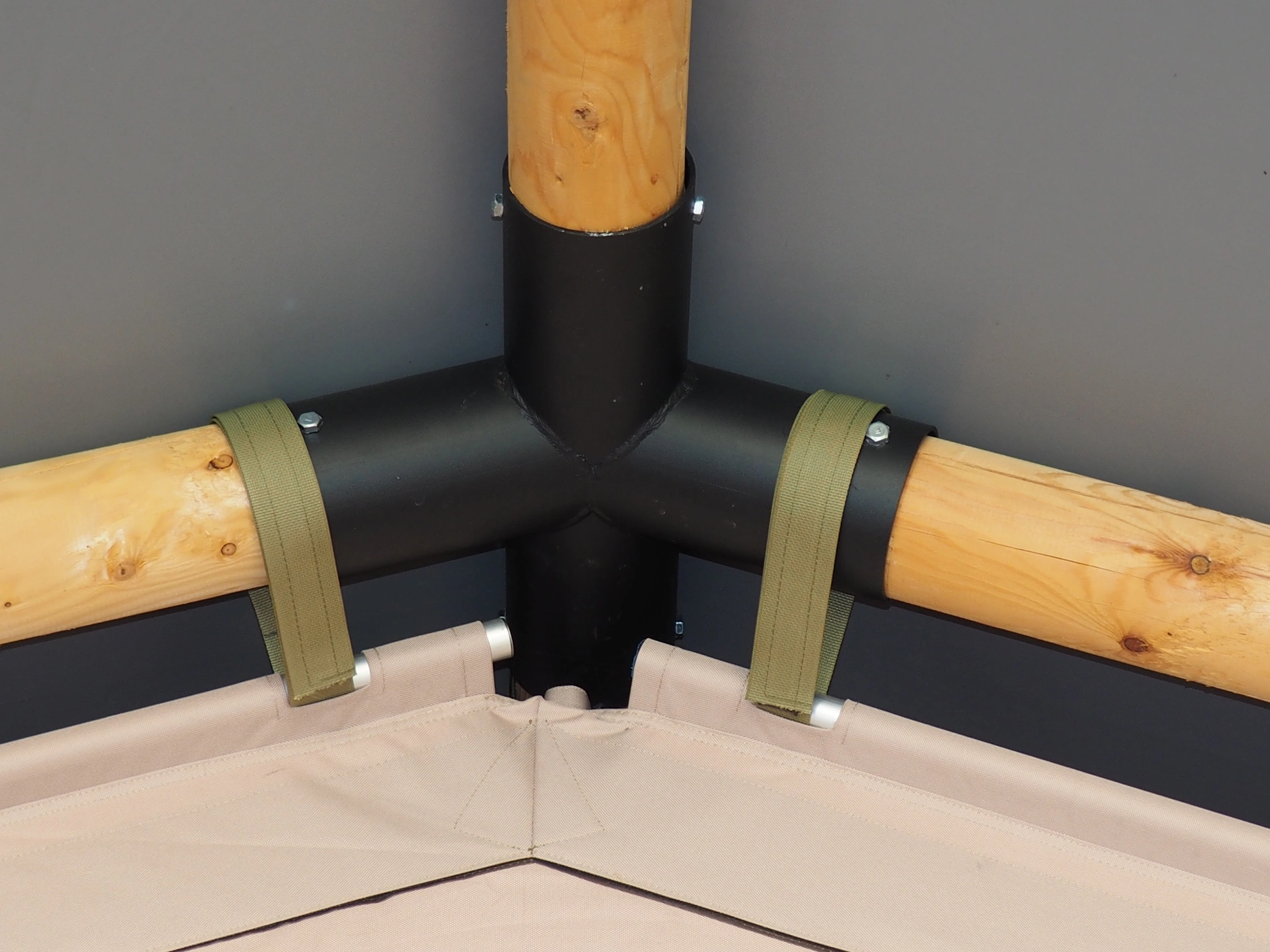
Steel Connectors and Structural Strength
Structural connectors transfer loads throughout the timber frame and play a critical role in overall stability.
High-strength steel connectors improve resistance to wind and long-term structural movement while ensuring every element works as a complete system.
Precision-engineered connectors also simplify maintenance and contribute to a longer service life.
Why Manufacturing Quality Matters
Many manufacturers reduce production costs by using thinner timber, lighter connectors or lower-grade fabrics.
Although these solutions may appear similar when new, differences become visible after years of exposure to weather and continuous guest use.
When developing a hospitality business, durability, reliability and lower maintenance costs provide significantly greater value than choosing the lowest purchase price.
Choosing a Glamping Tent for Long-Term Hospitality
Selecting a glamping tent should never be based on appearance alone.
Evaluate the structural frame, timber quality, technical fabrics, connectors, stitching and manufacturing standards before making a decision. These elements determine how well the accommodation performs over years of commercial operation.
A well-built glamping tent offers greater durability, lower operating costs and a better guest experience, making it a stronger long-term investment.
FAQ
What makes a quality glamping tent?
A quality glamping tent combines a strong timber frame, technical fabrics, durable steel connectors and precision manufacturing designed for long-term hospitality use.
How long does a commercial glamping tent last?
With proper materials and regular maintenance, a commercial-quality glamping tent can provide reliable performance for many years.
What type of timber is best for glamping tents?
Structural timber that is properly dried, treated and protected against moisture and insects provides the best long-term durability.
Why are technical fabrics important?
Technical fabrics improve weather resistance, UV protection, durability and guest comfort while reducing maintenance requirements.
Are steel connectors better than standard fittings?
Yes. High-strength steel connectors improve structural stability and increase resistance to wind and long-term loading.

